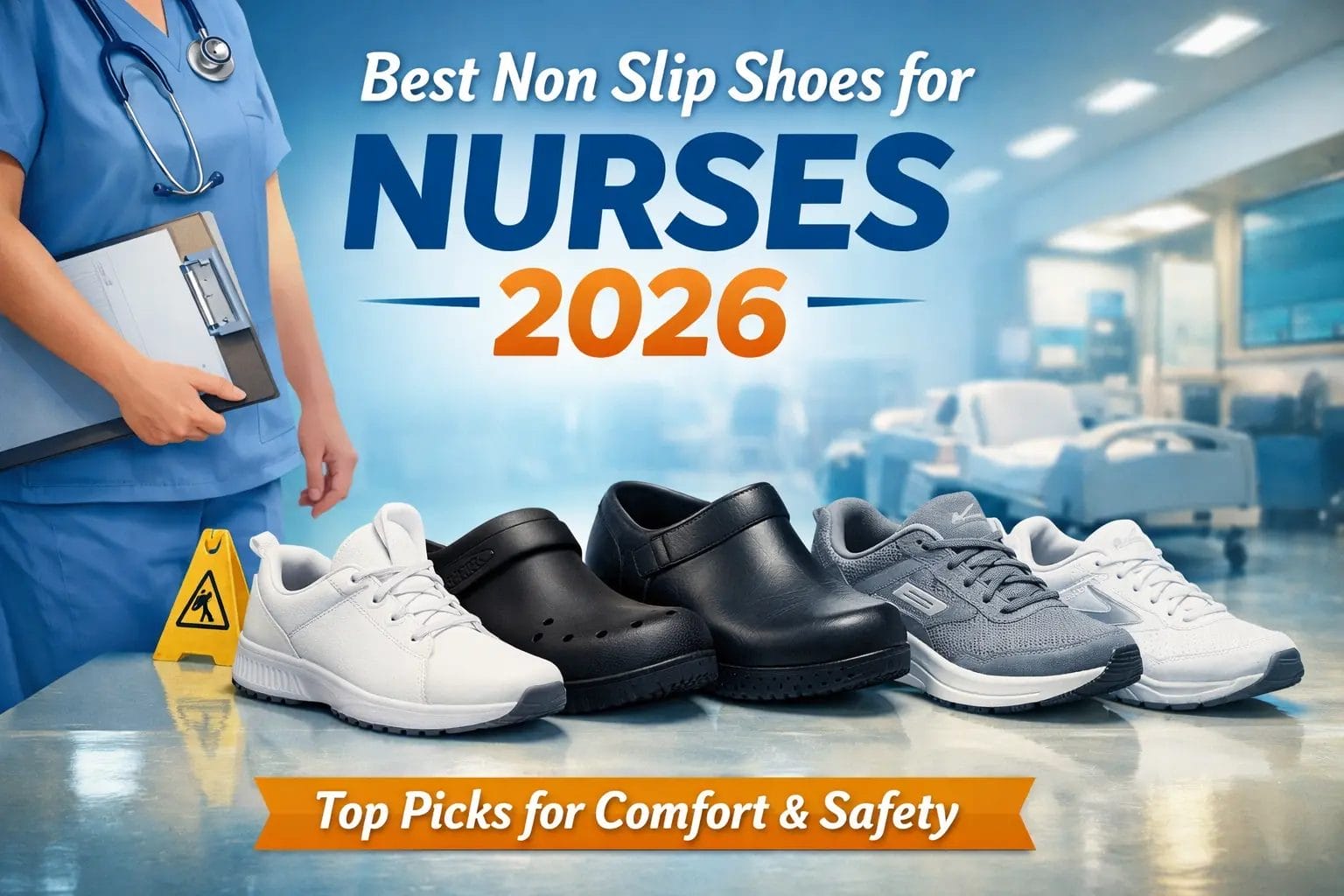
Best Non Slip Shoes for Nurses (2026) – Top Picks for Comfort & Safety
Nursing is one of the most physically demanding professions. Nurses spend long shifts on their feet, walking on hard floors, turning quickly during emergencies, and navigating spills of water, disinfectants, and other fluids. That’s why non-slip shoes aren’t optional — they’re essential.
A good pair of nursing shoes reduces the risk of slips and falls, supports foot and back health, and provides the comfort and cushioning your body needs during shifts that often exceed 12 hours. In addition, hospital safety policies and OSHA guidelines recommend footwear with reliable traction for clinical environments.
But great nursing shoes aren’t just about slip resistance — they must be comfortable, easy to clean, supportive, and suitable for long-term wear. Here are 2026’s top non-slip nursing shoes and everything you need to choose the right pair.
📊 Top Picks — Best Non Slip Shoes for Nurses (2026)
Below is a quick comparison of the best non-slip shoes recommended for nurses — including performance features and workplace comfort.
| Shoe Model | Best For | Traction | Comfort | Ease of Cleaning |
|---|---|---|---|---|
| Clove Classic Sneakers | All-day clinical wear | ⭐⭐⭐⭐☆ | ⭐⭐⭐⭐☆ | ⭐⭐⭐⭐☆ |
| Crocs Neria Pro II Work Clog | Wet, fluid-heavy shifts | ⭐⭐⭐⭐☆ | ⭐⭐⭐⭐☆ | ⭐⭐⭐⭐⭐ |
| Dansko XP 2.0 Clog | Arch support & durability | ⭐⭐⭐⭐☆ | ⭐⭐⭐⭐☆ | ⭐⭐⭐⭐☆ |
| Skechers Work D’Lux Walker SR | Budget-friendly comfort | ⭐⭐⭐⭐☆ | ⭐⭐⭐⭐☆ | ⭐⭐⭐⭐☆ |
| Brooks Ghost (work-ready) | Maximum cushioning | ⭐⭐⭐⭐☆ | ⭐⭐⭐⭐⭐ | ⭐⭐⭐☆☆ |
👟 Detailed Reviews — Best Non Slip Nursing Shoes
1. Clove Classic Sneakers — Best All-Around Clinical Shoe
Why nurses love them:
Clove Classic Sneakers are designed specifically for clinical professionals. They feature excellent traction, a flexible sole, and a water-resistant upper that’s easy to wipe clean—ideal for daily exposure to spills and fluids.
Standout features:
✔ Excellent hospital-grade slip resistance
✔ Lightweight with flexible cushioning
✔ Easy maintenance and cleaning
Pros:
• Comfortable all-day wear
• Professional look suitable for clinical settings
Cons:
• Slightly higher price point
• Narrower fit for wider feet
Best for: Nurses who want a balanced shoe for daily shifts and frequent movement.
2. Crocs Neria Pro II Work Clog — Best for Wet Conditions
Why nurses like them:
The Crocs Neria Pro II Work Clog is a nurse favorite for environments with frequent wet floors or fluid exposure. Its closed-toe design prevents liquids from entering, and the Croslite foam offers excellent cushioning.
Standout features:
✔ Closed-toe fluid-repellent design
✔ Slip-resistant tread ideal for polished floors
✔ Easy to clean and disinfect
Pros:
• Great under long shifts
• Simple clean-up and maintenance
Cons:
• Less structured arch support
• Clog style may feel bulky to some
Best for: Nurses in emergency rooms, OR, and high-spill environments.
3. Dansko XP 2.0 Clog — Best for Arch Support
Why nurses recommend it:
Dansko has been a healthcare staple for years for good reason. The XP 2.0 delivers structured arch support, shock absorption, and a durable slip-resistant outsole.
Standout features:
✔ Long-lasting performance
✔ Contoured midsole for stability
✔ Solid traction on various hospital surfaces
Pros:
• Excellent support for feet and lower back
• Great longevity
Cons:
• Heavier than sneakers
• Requires break-in period
Best for: Nurses who prioritize support and durability over lightweight design.
4. Skechers Work D’Lux Walker SR — Best Budget-Friendly Choice
Why it’s popular:
This Skechers model combines memory foam cushioning with a non-slip outsole at a more affordable price point. It’s a great all-around shoe for nurses who want reliable traction and comfort without spending a fortune.
Standout features:
✔ Plush memory foam insole
✔ Good slip resistance on wet floors
✔ Flexible design for daily use
Pros:
• Comfortable right away (minimal break-in)
• Great combination of price and performance
Cons:
• Memory foam cushioning may flatten over time
Best for: Nurses seeking comfort and traction on a budget.
5. Brooks Ghost & Work-Ready Running Options — Max Comfort
Why nurses choose them:
Though not specifically healthcare-branded, models like the Brooks Ghost excel in cushioning and shock absorption — ideal if you clock 10,000+ steps per shift.
Standout features:
✔ Adaptable cushioning system
✔ Excellent support and energy return
✔ High-grip rubber outsole
Pros:
• Superior comfort
• Useful for nurses with foot fatigue
Cons:
• Mesh uppers are not as fluid-resistant
• Not designed specifically for workplace cleaning
Best for: Nurses who want athletic-level cushioning and don’t mind pairing with fluid-resistant socks.
🧠 Nurse Buyer’s Guide — What to Look For
Choosing the right nursing shoes means balancing slipperiness, comfort, and fit. Here’s what to consider:
⚖️ 1. Slip Resistance & Traction
Choose shoes tested for wet and dry polished floors — hospital environments often have slick surfaces. Look for solid traction patterns and materials that grip water and spills.
👣 2. Cushioning & Fatigue Relief
Long shifts require shoes with impact-absorbing midsoles (memory foam, EVA, or proprietary cushioning) to protect your feet, knees, and back.
🦶 3. Arch Support
Good arch support prevents plantar pain and reduces fatigue. If you have high or low arches, consider removable insoles or orthotic inserts.
🧼 4. Easy-Clean Materials
Smooth leather, synthetic uppers, or water-resistant fabrics help prevent stains and make disinfecting simple.
🧵 5. Weight & Breathability
Lighter shoes reduce energy expenditure over long shifts, while breathable materials help manage sweat and discomfort.
📏 Nurse Shoe Size & Fit Tips (2026)
Getting the right size is critical for comfort and performance — here’s how to ensure a proper fit:
📌 Measure Your Feet at the End of the Day
Feet expand through the day, especially after long shifts. Measure them in the evening or after a long walk for the most accurate size.
📐 Check Width as Well as Length
Standard sizes often miss width needs. If you have wide feet:
-
Look for wide fit versions (many models offer this)
-
Avoid shoes that squeeze the toes — especially clogs with narrow toe boxes
👣 Toe Room
Make sure there’s about a thumb’s width (½ inch) of space between your longest toe and the front of the shoe.
👟 Break-In Period
Leather and structured shoes (like Dansko) may require a few days to soften. If possible, wear them for short periods before long shifts.
🧦 Wear the Socks You’ll Use at Work
Thick nursing socks or compression socks affect fit — always try shoes with the socks you wear daily.
📝 Final Thoughts
Choosing the right non-slip shoes for nurses can make a huge difference in comfort, performance, and safety. Whether you prefer a supportive clog, a cushioned sneaker, or a lightweight work shoe, the perfect pair should combine excellent traction with comfort and easy-clean materials.
👉 From fluid-resistant Crocs to supportive Dansko clogs and comfortable Skechers walkers, the options above cover a range of needs, foot shapes, and budgets — all ideal for nurses in 2026.