How Slip Resistant Shoes Work: The Science of Traction That Prevents Workplace Falls
Slips and falls are one of the leading causes of workplace injuries worldwide. Whether you work in a hospital, restaurant, warehouse, or industrial site, wearing proper slip resistant shoes can significantly reduce your risk of injury.
But how do slip resistant shoes actually work?
In this complete 2026 guide, we’ll explain the science behind traction, outsole materials, tread design, safety certifications, and how to choose the right pair for your specific job environment.
If you’ve ever wondered what makes shoes “non slip,” this guide will give you clear, evidence-based answers.
What Does “Slip Resistant” Really Mean?
First, it’s important to clarify something:
There is no such thing as 100% non-slip shoes.
“Non-slip” is a marketing term. The correct technical term is slip resistant, which means the shoe is engineered to reduce the risk of slipping under specific tested conditions.
Slip resistance depends on:
-
Outsole material
-
Tread pattern
-
Floor surface type
-
Presence of water, oil, or grease
-
Body weight and walking motion
Even the best shoes can slip if the surface conditions are extreme.
The Science Behind Slip Resistant Shoes
Slip resistant shoes are designed around a concept called the Coefficient of Friction (COF).
What Is the Coefficient of Friction?
The Coefficient of Friction measures how much grip exists between two surfaces — in this case, your shoe sole and the floor.
-
Higher COF = More traction
-
Lower COF = More slippery
Workplace safety testing measures how well a shoe maintains grip on wet or oily surfaces.
Shoes with higher COF ratings are better at preventing slips.
Key Components That Make Shoes Slip Resistant
Understanding how slip resistant shoes work requires looking at three main design elements.
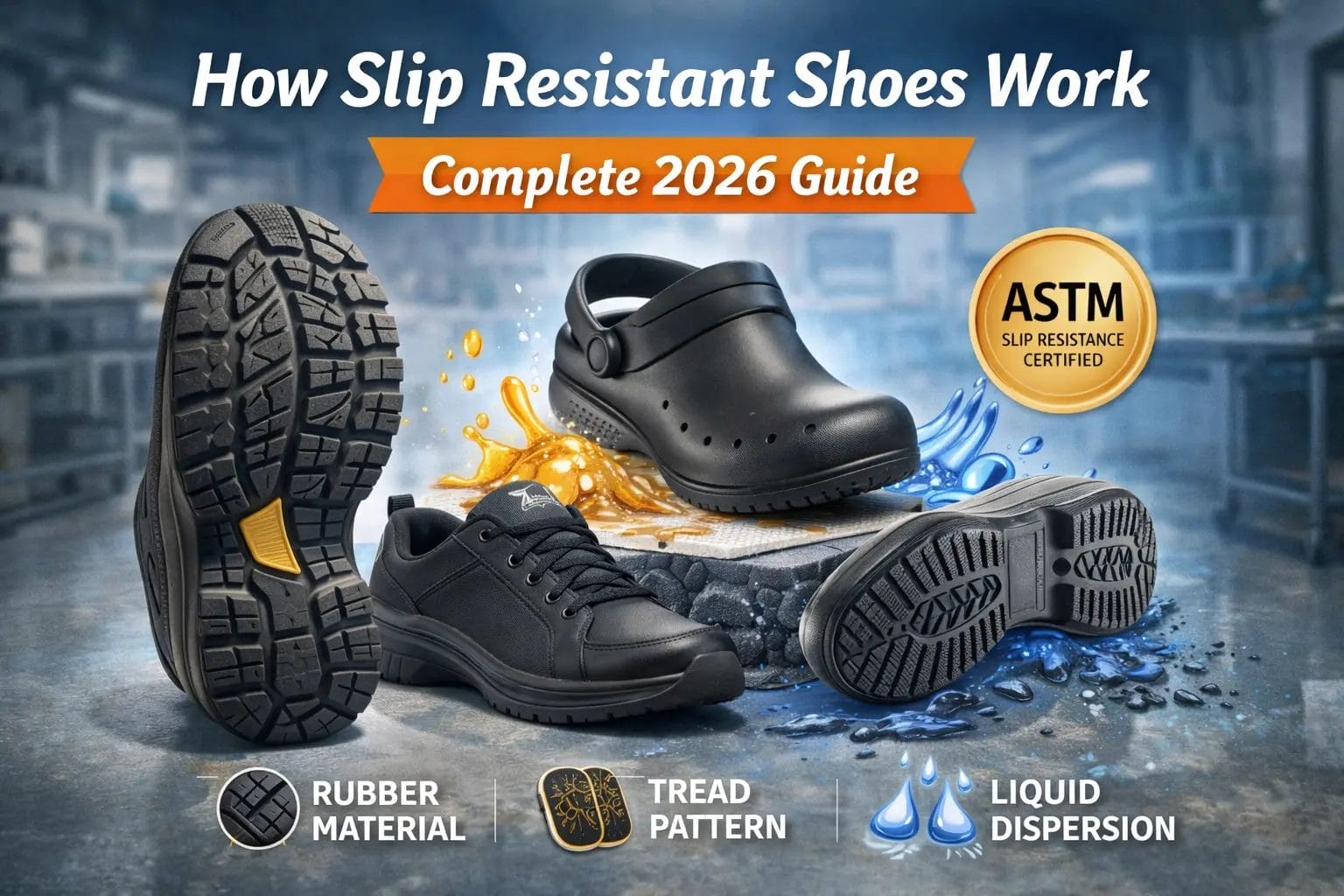
1. Outsole Material (The Most Important Factor)
The outsole — the bottom part of the shoe — is critical for traction.
Most slip resistant shoes use:
-
Soft rubber compounds
-
Oil-resistant rubber blends
-
High-traction synthetic materials
Rubber works well because it is flexible and can grip microscopic textures in flooring.
Hard plastic soles, on the other hand, are much more likely to slide.
Why this matters:
A slightly softer rubber sole increases surface contact and improves friction.
2. Tread Pattern & Groove Design
If you flip over a quality slip resistant shoe, you’ll notice:
-
Deep grooves
-
Multi-directional patterns
-
Channels designed to disperse liquid
These grooves help move water or oil away from the contact point between the shoe and the floor.
Without grooves, liquid creates a thin layer that can cause hydroplaning — similar to a car tire sliding on water.
Flat soles without defined tread are dangerous on wet surfaces.
3. Liquid Dispersion Technology
In environments like kitchens and hospitals, floors are often wet or greasy.
High-quality slip resistant shoes are designed to:
-
Break the surface tension of liquids
-
Prevent oil buildup
-
Maintain grip during forward and sideways movement
This is especially important for:
-
Nurses walking long hospital shifts
-
Restaurant workers in greasy kitchens
-
Warehouse staff on polished concrete floors
Different jobs require different traction performance.
Slip Resistance Testing Standards You Should Know
To build trust and ensure safety, look for shoes that meet recognized testing standards.
ASTM F2913 (United States Standard)
ASTM F2913 is a laboratory test that measures slip resistance on wet surfaces.
Shoes that pass this standard meet minimum traction requirements for workplace safety.
Many professional work shoes include ASTM certification labeling.
SRC Rating (European Standard)
SRC-rated shoes are tested on:
-
Ceramic tile with detergent
-
Steel floor with glycerol (oil simulation)
If a shoe has an SRC rating, it offers high slip resistance under challenging conditions.
OSHA Recommendations
The Occupational Safety and Health Administration (OSHA) does not approve specific brands but recommends slip resistant footwear in workplaces where slip hazards exist.
Many employers require certified footwear for safety compliance.
Why Some “Non Slip” Shoes Still Cause Slipping
Even quality shoes can fail under certain conditions.
Common reasons include:
-
Worn-out tread
-
Soles clogged with grease
-
Extremely contaminated floors
-
Using water-resistant shoes in oily environments
For example:
Healthcare workers need water-resistant traction.
Kitchen workers need oil-resistant soles.
Using the wrong type increases slip risk.
Slip Resistant vs Oil Resistant: What’s the Difference?
These terms are often confused.
Slip resistant shoes:
-
Designed mainly for wet floors
Oil resistant shoes:
-
Specifically built for greasy environments
Many restaurant workers need both features.
Always check product specifications carefully before buying.
How Long Do Slip Resistant Shoes Last?
On average, slip resistant shoes last:
-
6 to 12 months with daily use
-
Less in high-grease environments
Replace your shoes if you notice:
-
Flattened tread
-
Uneven sole wear
-
Reduced grip compared to when new
Worn soles dramatically reduce traction and increase injury risk.
Who Should Wear Slip Resistant Shoes?
Slip resistant shoes are essential for:
-
Restaurant staff and chefs
-
Warehouse employees
-
Construction workers
-
Janitorial staff
If your workplace has wet, polished, or oily floors, investing in proper footwear is not optional — it’s a safety necessity.
How to Choose the Right Slip Resistant Shoes
Before purchasing, check for:
-
Rubber outsole material
-
Deep multi-directional tread
-
ASTM or SRC certification
-
Oil resistance if needed
-
Comfort for long shifts
Traction matters — but so does support and cushioning.
A good shoe should protect you from slips and reduce foot fatigue during long work hours.
Final Thoughts: How Slip Resistant Shoes Protect You
Slip resistant shoes work by combining:
-
High-friction rubber materials
-
Smart tread engineering
-
Liquid dispersion channels
-
Certified traction testing
Understanding how slip resistant shoes work helps you make informed decisions rather than relying on marketing claims.
If you work in an environment with slip hazards, proper footwear is one of the simplest and most effective ways to reduce injury risk.
Choosing the right pair could protect you from serious accidents — and keep you comfortable during long shifts.