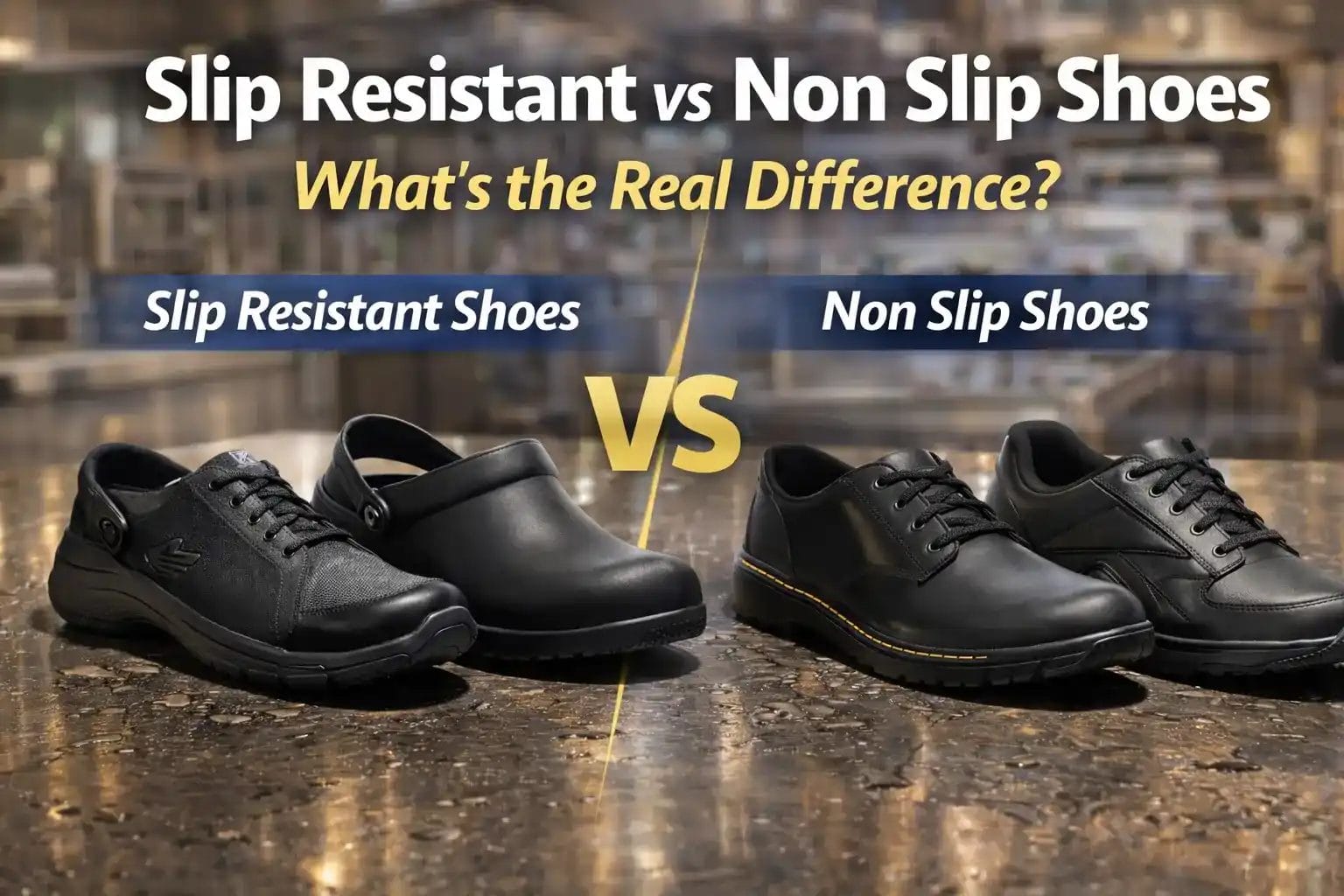
Slip Resistant vs Non Slip Shoes – Are They the Same or Different?
When shopping for work shoes, you may notice the terms slip resistant and non slip used interchangeably. While they sound similar, many workers wonder whether there is actually a difference between these two types of footwear.
Understanding the difference between slip resistant and non-slip shoes is important, especially for people working in environments where wet or oily floors are common. Choosing the right type of shoe can significantly reduce the risk of workplace accidents and improve comfort during long shifts.
In this guide, we’ll explain what slip resistant shoes are, what non slip shoes are, how they compare, and which one is best for your job.
Table of Contents
ToggleWhy Slip Protection Matters at Work
Slips and falls are among the most common workplace accidents. Workers in restaurants, hospitals, retail stores, and warehouses often encounter floors that can become slippery due to water, oil, grease, or cleaning chemicals.
Without proper footwear, even a small spill can lead to a dangerous fall.
Proper slip resistant footwear provides several benefits:
-
Better traction on smooth floors
-
Reduced risk of workplace injuries
-
Improved stability while walking quickly
-
More confidence when working in hazardous conditions
This is why many workplaces require employees to wear specialized slip resistant footwear.
What Are Slip Resistant Shoes?
Slip resistant shoes are designed to reduce the chances of slipping on wet or oily surfaces. They achieve this through special outsole materials and tread patterns.
Key features of slip resistant shoes include:
-
Rubber outsoles with a strong grip
-
Deep tread patterns that channel liquids away
-
Oil resistant compounds
-
Textured soles for added traction
These shoes are commonly used in industries such as:
-
restaurants and kitchens
-
healthcare facilities
-
retail environments
-
hospitality businesses
Slip resistant shoes are designed to minimize slipping, but they cannot eliminate the risk.
What Are Non Slip Shoes?
Non slip shoes are essentially a marketing term often used to describe slip resistant footwear. In most cases, when a brand advertises “non slip shoes,” they are referring to shoes that are designed with slip resistant technology.
In other words, non slip shoes and slip resistant shoes usually mean the same thing in everyday use.
However, some manufacturers use the term “non slip” to emphasize that their shoes provide maximum traction and stability in slippery environments.
Non slip shoes typically include features such as:
-
specially engineered rubber soles
-
advanced traction patterns
-
shock absorbing midsoles
-
comfortable footbeds for long shifts
These shoes are commonly used by:
-
chefs and kitchen workers
-
nurses and healthcare professionals
-
retail employees
Slip Resistant vs Non Slip Shoes: Key Differences
Although the terms are often used interchangeably, there are a few subtle differences in how they are used.
| Feature | Slip Resistant Shoes | Non Slip Shoes |
|---|---|---|
| Meaning | Designed to reduce slipping | Often used as a marketing term |
| Traction Technology | Rubber outsoles with tread patterns | Same traction technology |
| Workplace Use | Common in safety regulations | Common in product marketing |
| Performance | High traction | High traction |
In practical terms, both types of shoes offer the same purpose: preventing slips and improving safety at work.
How Slip Resistant Technology Works
Slip resistant shoes use several design elements to improve traction.
Rubber Outsoles
Rubber provides better friction against smooth surfaces compared to hard plastic or leather soles.
Tread Patterns
Deep grooves help channel water or oil away from the shoe, allowing the sole to maintain contact with the floor.
Micro-Grip Textures
Some modern work shoes include microscopic grip patterns that improve traction even on extremely smooth surfaces.
These technologies work together to help workers maintain stability in challenging environments.
Industries That Require Slip Resistant Footwear
Many professions require slip resistant shoes for safety reasons.
Restaurant and Kitchen Workers
Kitchens often have slippery floors due to spilled oil, water, or food debris.
Slip resistant shoes help chefs and kitchen staff move quickly while staying safe.
Healthcare Professionals
Nurses and hospital workers walk long distances on polished floors.
Proper footwear reduces fatigue and prevents accidental falls.
Retail Employees
Retail workers spend long hours standing and walking on tile floors.
Slip resistant shoes provide comfort and stability throughout the day.
Warehouse Workers
Warehouse environments may include dust, water, or smooth concrete floors.
High-traction shoes improve safety and productivity.
How to Identify True Slip Resistant Shoes
Not all shoes labeled “non slip” provide the same level of traction.
Here are a few things to check before buying:
Look for Rubber Outsoles
Rubber provides better grip than plastic materials.
Check the Tread Pattern
Deep, well-designed grooves improve traction on slippery floors.
Read Product Reviews
Customer feedback often reveals how well shoes perform in real workplaces.
Choose Reputable Brands
Trusted brands often invest more in traction technology and durability.
Common Myths About Non Slip Shoes
There are several misconceptions about slip resistant footwear.
Myth 1: Non Slip Shoes Prevent All Falls
No shoe can eliminate slipping, but high-quality shoes significantly reduce the risk.
Myth 2: All Rubber Shoes Are Slip Resistant
Some rubber soles lack proper tread patterns, which limits traction.
Myth 3: Running Shoes Work the Same
Athletic shoes are designed for performance, not workplace safety.
Slip resistant work shoes use specialized outsole technology.
Tips for Maintaining Slip Resistant Shoes
Even the best work shoes lose traction over time if they are not maintained properly.
To keep your shoes effective:
-
Clean the outsole regularly
-
Remove grease and debris
-
Replace worn shoes when tread patterns fade
-
Rotate between two pairs if possible
Proper maintenance helps preserve grip and extend the life of your shoes.
Frequently Asked Questions
Are slip resistant and non slip shoes the same?
Yes, in most cases the terms are used interchangeably. Both refer to shoes designed to improve traction on slippery surfaces.
Do workplaces require slip resistant shoes?
Many workplaces such as restaurants, hospitals, and warehouses require slip resistant footwear for safety.
How long do slip resistant shoes last?
Most slip resistant shoes last 6–12 months, depending on usage and working conditions.
Can regular sneakers be slip resistant?
Most regular sneakers do not provide the same traction as specialized work shoes.
Final Verdict
Understanding the difference between slip resistant vs non slip shoes helps workers choose the right footwear for their job.
While the terms are often used interchangeably, both types of shoes are designed to improve traction and reduce the risk of slipping on wet or oily surfaces.
When choosing work shoes, always look for:
-
durable rubber outsoles
-
deep tread patterns
-
strong arch support
-
comfortable cushioning
The right pair of shoes can significantly improve workplace safety while keeping your feet comfortable during long shifts.